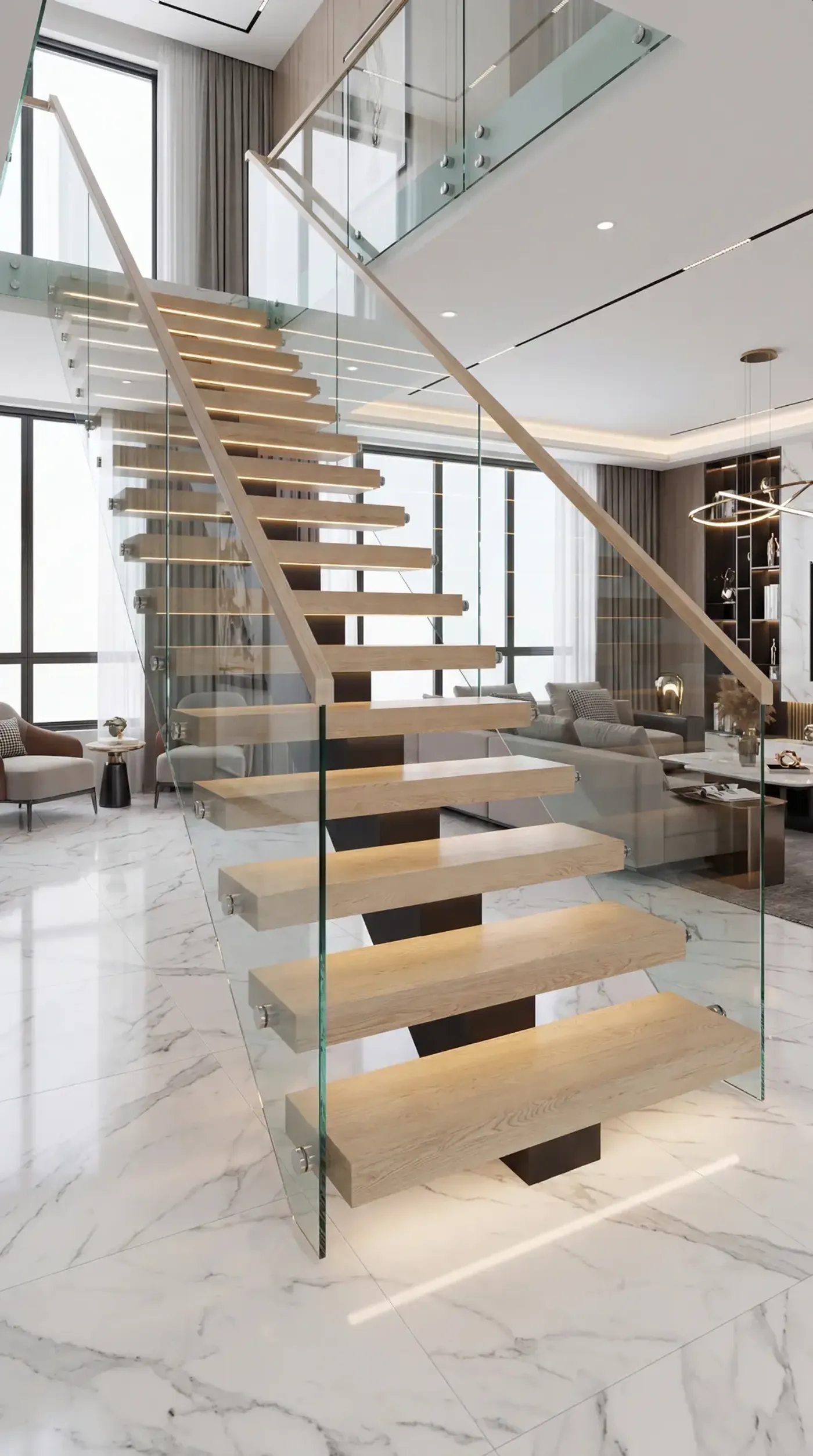
Glass tread cantilevered floating stair system in a New York City loft

Glass Tread Cantilevered Stair Systems in NYC

The lightest visual footprint possible. Glass tread systems for NYC lofts, co-ops, and modern interiors where openness and light flow are priorities.

At New York Floating Stairs , glass tread cantilevered systems are one of the most technically demanding services we offer — and one of the most visually striking when done right. The key is engineering precision, not just aesthetic intent.

Tempered laminated glass treads require specific thickness specs, edge treatment, and connection detailing to meet NYC building code. We calculate the structural requirements for each tread based on span length, load, and glass properties — then specify the right product for the application.

Glass tread systems work especially well in NYC loft spaces where the goal is to preserve sightlines and move natural light between floors. The visual transparency of the tread makes the staircase feel like it floats more completely than any wood or steel tread can achieve.

We pair glass treads with appropriate railing systems — frameless glass balustrades, cable rail, or slim steel — depending on the overall design direction. Every component is sized and specified together so the finished system reads as one cohesive design.

DOB documentation for glass tread systems includes tread structural calculations and product specifications alongside the standard cantilever engineering. We handle that as part of the permit package — no separate submittals.
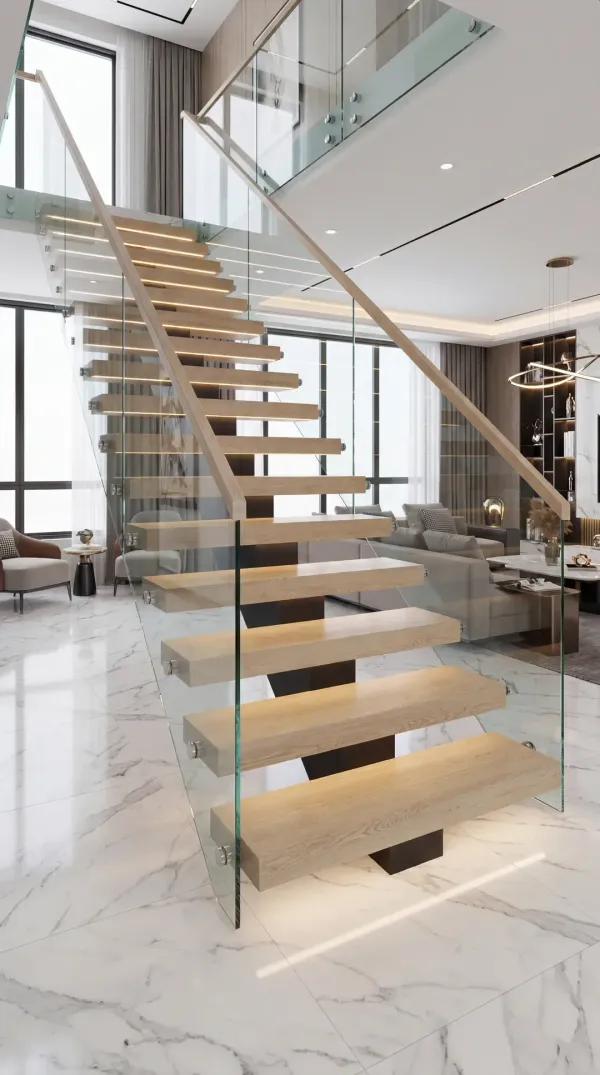
Completed glass tread cantilevered floating staircase in a NYC interior

Glass tread systems engineered for NYC code

Free site assessment. Structural proposal within 48 hours.

How We Build Glass Tread Stair Systems
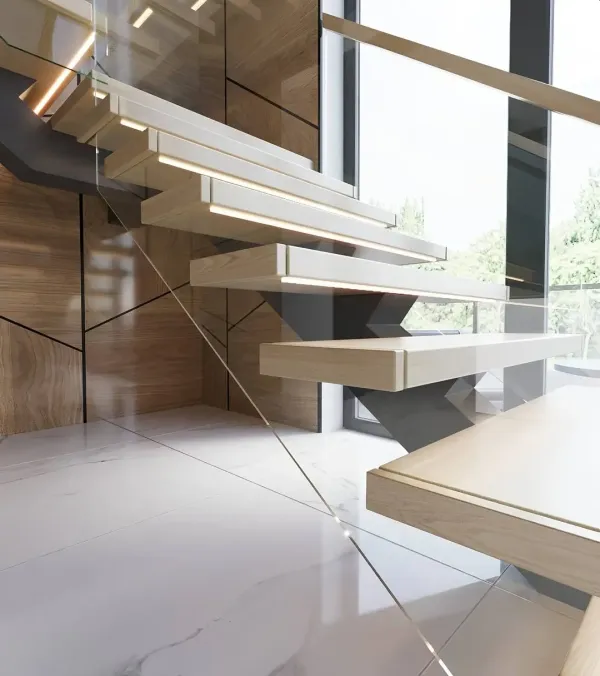
Glass tread floating stair installation process in NYC
01
Structural Site Assessment
We measure the space, assess wall conditions, and determine the anchor strategy required for glass tread cantilever loads.
02
Glass Specification & Engineering
We calculate tread span, load requirements, and glass thickness, then specify the correct tempered laminated product and hardware.
03
DOB Documentation
Full permit package including cantilever calculations, tread structural specs, and connection details for NYC DOB submission.
04
Component Fabrication & Glass Ordering
Steel or concrete structure is fabricated to field measurements. Glass treads are ordered to cut size with correct edge treatment.
05
Installation & Inspection
Treads and railings are installed and aligned. We coordinate DOB inspection and verify structural performance before final handoff.

FAQ: Glass Tread Systems

Are glass treads safe for everyday use? +
Yes, when correctly specified. We use tempered laminated glass sized and rated for the required loads. Even if the outer layer chips, the inner laminate keeps the tread intact. We calculate and verify tread capacity as part of our engineering process.
Do glass treads require special cleaning? +
They show footprints more readily than wood. Most clients manage this with a quick wipe-down as part of normal household maintenance. We can recommend low-iron glass or specific coatings that reduce visible smudging.
What railing system goes best with glass treads? +
Frameless glass balustrades are the most common pairing because they extend the visual transparency of the treads. Slim steel cable rail is another option. The choice depends on your code requirements, interior style, and budget.
Can glass treads be installed in older NYC buildings? +
Yes, though pre-war buildings may need wall reinforcement before the cantilever anchor is installed. We assess the wall conditions first and specify any required prep work as part of the engagement.
How much do glass tread systems cost compared to wood? +
Glass tread systems typically cost more than hardwood due to the glass specification, hardware, and additional engineering. We provide detailed pricing after site assessment so you have clear expectations before committing.

Ready to explore a glass tread system?

Free site assessment. Design and engineering direction within 48 hours.