
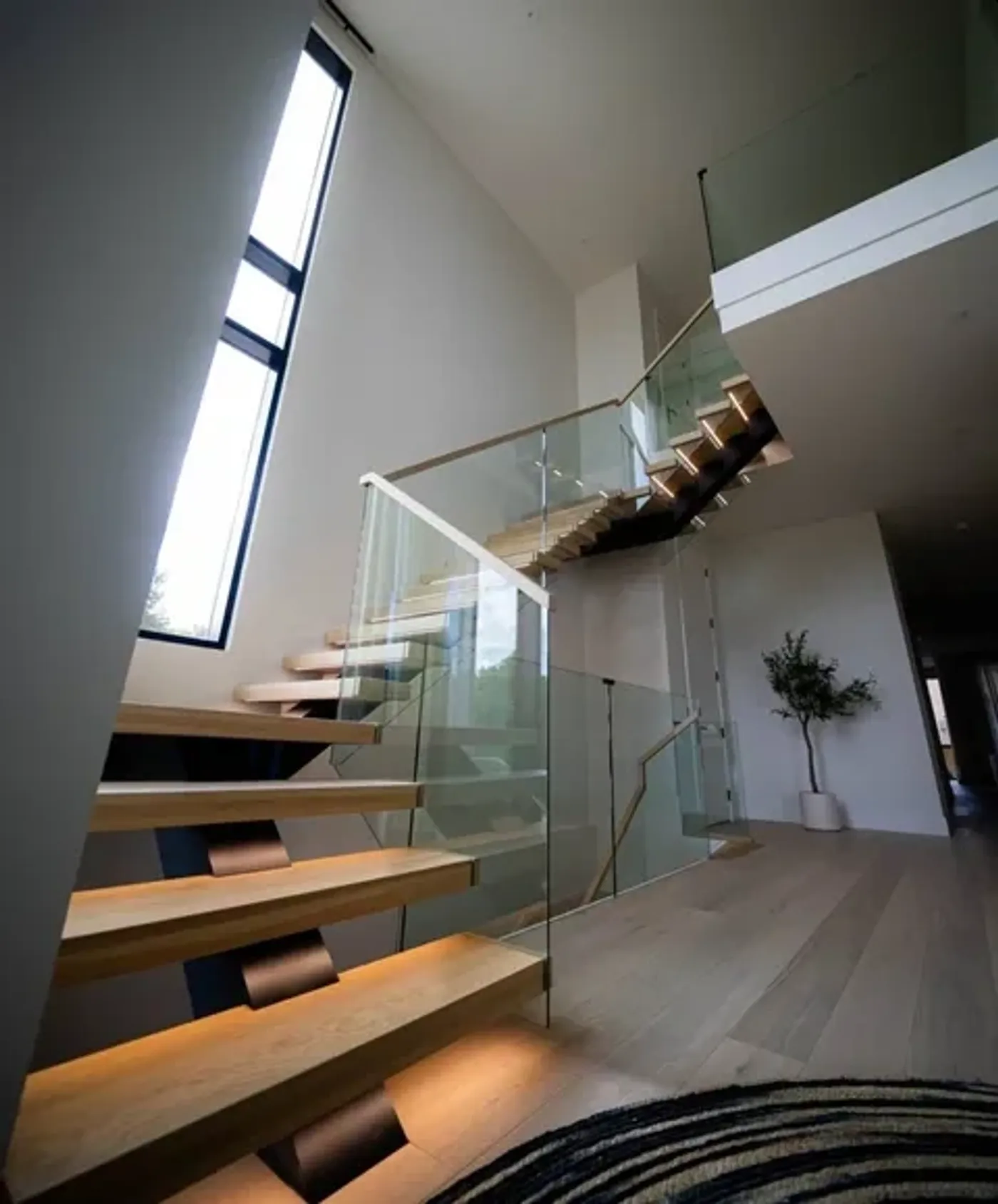
Custom Glass Balustrade Rail Systems for NYC Floating Stairs
Frameless and low-profile glass railing systems that preserve the open feel of floating stairs. Code-compliant for NYC residential and commercial applications.
At New York Floating Stairs , glass balustrade rail systems are designed together with the floating stair structure — not sourced separately and attached afterward. The base shoe profile, glass thickness, and post or channel specifications are all coordinated with the stair structural system to produce a finished result that reads as one system.
Frameless glass is the most visually open railing option for NYC floating stairs. It preserves sightlines across floors, keeps natural light moving through the space, and doesn't compete visually with the stair itself. The glass panels become part of the architectural composition rather than a barrier.
NYC building code requires specific glass specifications for balustrade applications — laminated safety glass of minimum thickness, rated for required guard loads. We specify compliant glass as part of the standard railing package and include specifications in the DOB documentation.
Glass clarity options include low-iron (ultra-clear) and standard float glass. Low-iron glass has no green tint and is the preferred choice for high-end interiors where color neutrality matters. Standard float glass is appropriate for most applications and is less expensive.
Top cap options range from no cap (the most minimal look, glass only) to slim aluminum or stainless steel top rails. For handrail requirements, we coordinate a continuous handrail detail that meets code while preserving the clean visual profile.
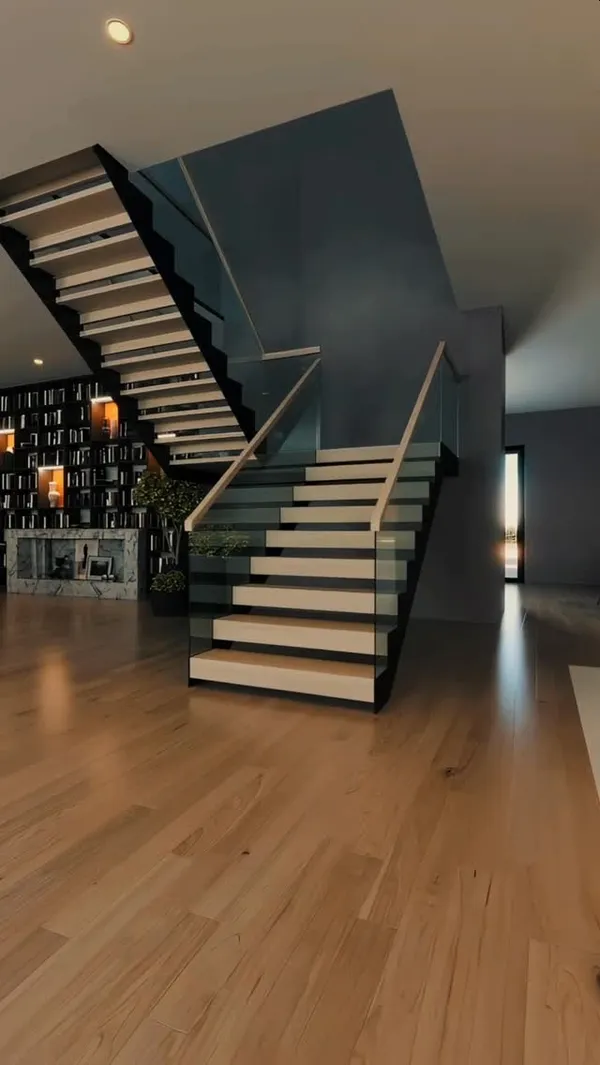
Glass rail systems sized and specified for NYC code
Site assessment. Glass specification and design direction included.
FAQ: Glass Balustrade Rail Systems
What glass thickness is required for NYC stair balustrades? +
What's the difference between low-iron and standard glass? +
Can glass railings be added to an existing floating stair? +
Do glass railings require a top handrail? +
How do you clean frameless glass railings? +
Ready to specify your glass railing?
Site assessment. Glass spec and design direction included in the first conversation.