
Trends in Floating Stair Designs for Luxury Homes
Luxury stair design changes slower than social media makes it seem. The trends that matter are not the loudest ones. They are the ones clients still want after the novelty wears off.
Published: April 10, 2026
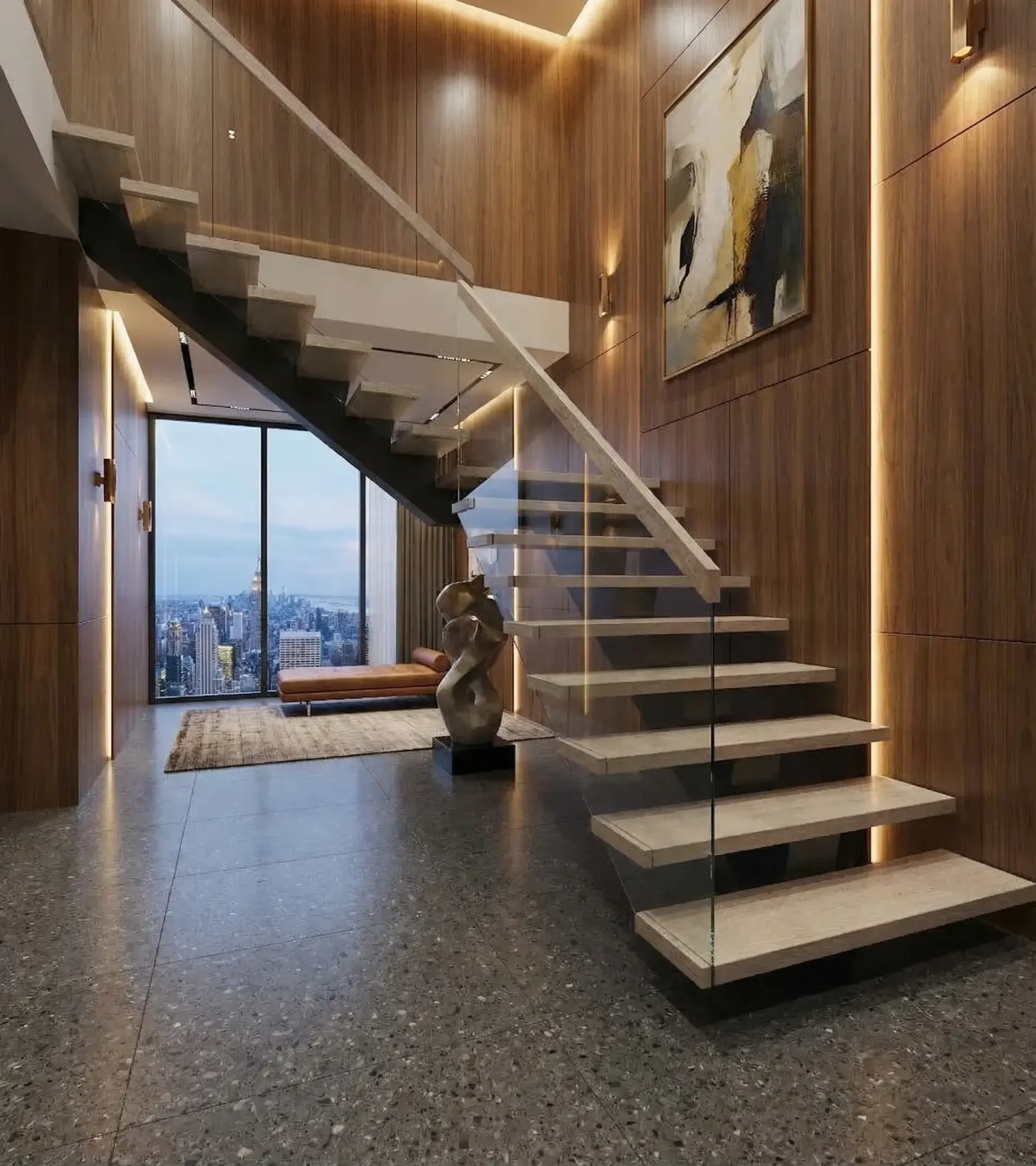
At New York Floating Stairs , we see luxury clients ask for the same thing in different language: a stair that feels custom, calm, and unmistakably built for the house. The trend is not just open risers anymore. It is refinement.
Trend one: softer geometry
Sharp black-and-white modernism still has a place, but many luxury homes are moving toward softer forms. Curved stringers, eased tread edges, and less aggressive transitions are showing up more often than the hard-edged ultra-minimal look from a few years ago.
That doesn't mean ornate. It means the stair feels tailored instead of mechanical. Curves are one expression of that. Quiet detailing is another.
Trend two: warm materials over colder contrast
Luxury homes are leaning warmer. More white oak. More rich walnut. Fewer stark black steel moments unless the architecture truly calls for it. Clients still want floating stairs, but many want them to feel expensive and livable, not industrial for the sake of it.
That's a good shift. Warmth usually ages better. It also gives the stair a stronger relationship to floors, paneling, and custom millwork.
Trend three: cleaner guard systems
Glass is still strong, but the supporting hardware is getting quieter. Slimmer posts, cleaner channels, better alignment, and more disciplined hand-contact details are replacing the heavier early-generation frameless look that sometimes felt overbuilt.
Luxury clients notice refinement fast. A floating stair with clumsy guard details can kill the whole effect.
Trend four: integrated lighting, used carefully
Hidden lighting is still in demand, but clients are getting more selective. The current version is subtler. Softer output. Better concealment. Less nightclub glow. More architectural shadow.
That's good news. Luxury design usually improves when features become harder to notice and easier to feel.
Trend five: custom fit over catalog look
This may be the biggest one. High-end clients want stairs that look specific to the house. Not a preselected model dropped into a premium interior. That means more custom geometry, more material coordination, and more attention to how the stair hits walls, landings, and adjacent finishes.
Luxury buyers can tell when something was chosen from a menu. They may not say it directly, but they feel it.
Which trends actually last?
The ones rooted in proportion, material quality, and restraint. Warm wood with disciplined supports. Curves that belong to the architecture. Quiet lighting. Guard systems that disappear. These are not fragile fashion choices. They are refinements of the basic idea.
The trends that fade fastest are the ones built around spectacle: oversized slabs with no visual reason, aggressive lighting effects, or complicated support expressions that only work in one carefully staged photo.
Reviewing floating stair options for a luxury home?
We can help sort out what is timeless, what is just noise, and which design moves will still feel right once the rest of the house is finished.